
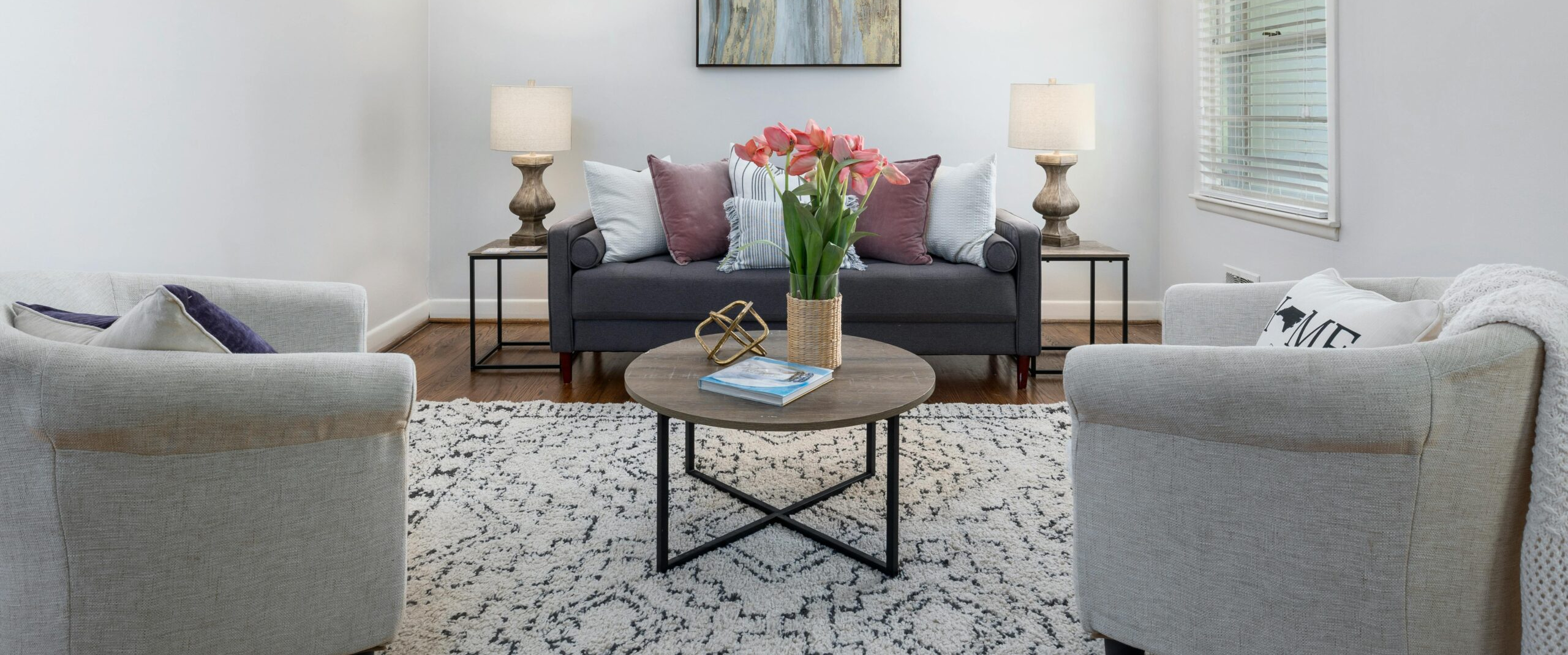

Choosing The Right Living Room Rug

A rug has a quiet kind of power. A rug can anchor a room, soften hard edges, and make everything feel intentional— yet it’s also one of the easiest pieces to get wrong. Too small, and your space feels disconnected. Too bold, and it overwhelms everything else. If you’ve ever felt stuck staring at dozens of options, you’re not alone.
Learning how to choose a rug isn’t about memorizing rigid rules— it’s about understanding proportion, balance, and how your space actually functions day to day. The right rug should support your layout, complement your color palette, and make your living room feel finished rather than decorated.
In this guide, I’ll walk you through exactly how to choose a living room rug step by step— covering size, placement, color, and styling— so you can make a confident decision that works beautifully in your home.
How to Choose a Rug: Start with Size (Not Style)
If there’s one mistake I see over and over, it’s choosing a rug based on how it looks before considering how it fits. When you choose a living room rug, size should always come first. A perfectly styled rug that’s too small will make even a well-designed living room feel off.
Why size matters more than anything else
A rug defines the visual boundaries of your seating area. When it’s properly sized, it pulls furniture together and creates a cohesive layout. When it’s too small, everything feels like it’s floating.
Standard living room rug size guidelines
Use these as a starting point:
- 8×10 rugs: Ideal for most average-sized living rooms. Allows front legs of furniture to sit comfortably on the rug.
- 9×12 rugs: Best for larger spaces or open-concept layouts where you want full coverage.
- 5×7 or smaller: Generally too small for main seating areas— better suited for layering or accent use.
The “front legs on” rule
One of the simplest ways to determine how to choose a rug size is this:
- Place at least the front legs of your sofa and chairs on the rug
- This visually connects all major furniture pieces
- It instantly creates a more intentional layout
Leave breathing room
Your rug shouldn’t touch the walls. Aim for:
- 6–12 inches of exposed flooring around the edges
- This frames the space and prevents the rug from feeling oversized
Choosing the right rug size is the foundation of everything. Before thinking about patterns or colors, focus on proportions. When you choose a rug based on size, the rest becomes much easier— and your entire room will feel more grounded.
Proper Living Room Rug Placement

Once you’ve nailed the size, placement is what brings everything together. Understanding living room rug placement is a key part of how to choose a rug that actually works in your space.
Common placement layouts
1. All furniture on the rug
- Best for large rooms
- Creates a luxurious, cohesive feel
- Requires a larger rug (usually 9×12 or bigger)
2. Front legs only (most popular)
- Works in most living rooms
- Balances coverage with practicality
- Keeps the space feeling open but connected
3. Coffee table only (use cautiously)
- Often used with smaller rugs
- Can make the room feel disconnected if not styled carefully
Rug placement with sectionals
Sectionals can be tricky, but the same principles apply:
- Ensure the rug extends beyond the edges of the sectional
- Avoid rugs that stop awkwardly halfway under the sofa
- A larger rug typically works best here
Spacing tips that make a difference
- Keep at least 12–18 inches between rug and wall in larger rooms
- Center the rug under your coffee table
- Align the rug with the main seating area— not the room itself
Placement is where your rug starts to feel intentional. When you understand how layout affects flow, deciding how to choose a rug becomes less about guesswork and more about creating a space that feels naturally balanced.
Choose a Color That Complements Your Space

Color is where personality comes in— but it’s also where many people get stuck. The wrong color can throw off your entire room. That’s why understanding how color interacts with the space is so important when choosing a living room rug.
Start with your existing palette
Look at your room and consider your sofa and wall color, along with accent pieces such as pillows, wall art, and table decor. Your rug should support your living room color scheme, not compete with it.
Three easy color approaches
Here are three simple approaches to choosing a rug color:
1. Neutral foundation
- Works in almost any space
- Adds texture without overwhelming
- Great for layered, evolving rooms
2. Tone-on-tone
- Pulls colors already in your room
- Creates a cohesive, polished look
- Feels intentional without being bold
3. Statement piece
- Adds contrast and personality
- Works best in otherwise neutral rooms
- Should still tie into at least one existing color
Light vs. dark rugs
Light rugs tend to make a room feel larger and more open, while dark rugs add depth and a sense of grounding.
Choose a rug color based on how you want the room to feel— not just what looks good by itself.
Pattern considerations
- Busy rooms → simpler rugs
- Minimal rooms → patterned rugs can add interest
- Always consider scale (small patterns vs. large patterns)
Color is about balance, not boldness. When you approach it thoughtfully, a rug becomes a way to enhance your entire design— not just fill empty floor space.
Choose a Rug That Matches Your Style

Once you’ve determined the right rug size and color, the style of the rug will tie everything together. When you’re figuring out how to choose a rug, it’s important to choose one that aligns with the overall feel of your space.
Match your design aesthetic
Here’s a simple breakdown:
- Modern spaces: Clean lines, neutral tones, subtle patterns
- Traditional rooms: Rich colors, classic patterns, detailed designs
- Minimal spaces: Soft neutrals, low-contrast designs
- Boho interiors: Layered textures, vintage-inspired rugs
- Eclectic spaces: Mixed styles, layered textures— ideal for mixing decor styles and tying everything together
Texture matters just as much as pattern
Think beyond color:
- Flatweave rugs → casual and relaxed
- Plush rugs → cozy and inviting
- Natural fiber rugs → earthy and organic
Avoid overmatching
Remember, your rug doesn’t need to match everything exactly. In fact, a bit of contrast often makes a space feel more curated.
Think long-term
Trendy rugs can be fun, but consider whether you’ll still love it in a year. When you choose a living room rug, it’s worth investing in something that will last and feel timeless.
Choose a Rug Material That Fits Your Lifestyle
Practicality matters just as much as aesthetics. A beautiful rug that doesn’t hold up to daily life quickly becomes frustrating. That’s why choosing the right living room rug includes selecting the right material.
Common rug materials:
Natural wool rugs
Ideal for busy living rooms where you want comfort, durability, and a timeless look.
- Durable and soft
- Naturally stain-resistant
- Best for high-traffic areas
Synthetic rugs (polypropylene, polyester)
Great for homes with kids, pets, or anyone who wants a low-maintenance, practical option.
- Budget-friendly
- Easy to clean
- Ideal for families and pets
Other natural fibers (jute, sisal)
Great for adding warmth and texture in more casual or relaxed living spaces.
- Textured and organic
- Adds subtle visual interest
- Rough and less durable with heavy use
Other materials like cotton, viscose, and hide rugs are also available, but they’re typically better suited for low-traffic areas.
How to Choose a Rug for Small Spaces

Small spaces require a slightly different approach than larger ones. If you’re working with limited square footage, understanding how to choose a rug strategically can actually make your room feel bigger.
Go bigger than you think
A common mistake is choosing a small rug to “fit” the space. In reality:
- Larger rugs create the illusion of more space
- Small rugs break up the room visually
Keep it light and airy
- Light colors reflect more light
- Subtle patterns prevent visual clutter
Use placement to your advantage
- Anchor your seating area fully
- Avoid rugs that sit awkwardly in the middle
In smaller spaces, your rug should feel connected to your furniture—not separate from it. When you understand how to choose a rug for scale, your room instantly feels more open and cohesive.
Common Rug Mistakes (and How to Avoid Them)
Even with the best intentions, a few small mistakes can throw off your entire room. Knowing what to avoid is a big part of understanding how to choose a rug confidently.
Mistake #1: Choosing a rug that’s too small
This is the most common issue— and the easiest to fix.
Mistake #2: Ignoring placement
Even the right size rug can feel wrong if it’s not positioned correctly.
Mistake #3: Matching everything too perfectly
Rooms should feel layered, not overly coordinated.
Mistake #4: Prioritizing looks over function
A rug needs to work for your lifestyle— not just your aesthetic.
Avoiding these mistakes is just as important as making the right choices. When you understand what doesn’t work, learning how to choose a rug becomes much more intuitive.
Bring It All Together: How to Choose a Living Room Rug with Confidence

By now, you can see that choosing a living room rug isn’t about making one single decision— it’s about understanding how size, placement, color, and material all work together.
Start with size to ground your layout. Use placement to create flow. Choose colors that complement your space, and materials that support your lifestyle. When each element works together, your rug won’t just fill space— it will define it.
Most importantly, trust your eye. Once you understand how to choose a rug, it becomes easier to make a decision that feels both practical and personal. A well-chosen rug has a way of pulling everything together— and once it’s right, the entire room feels complete.


