
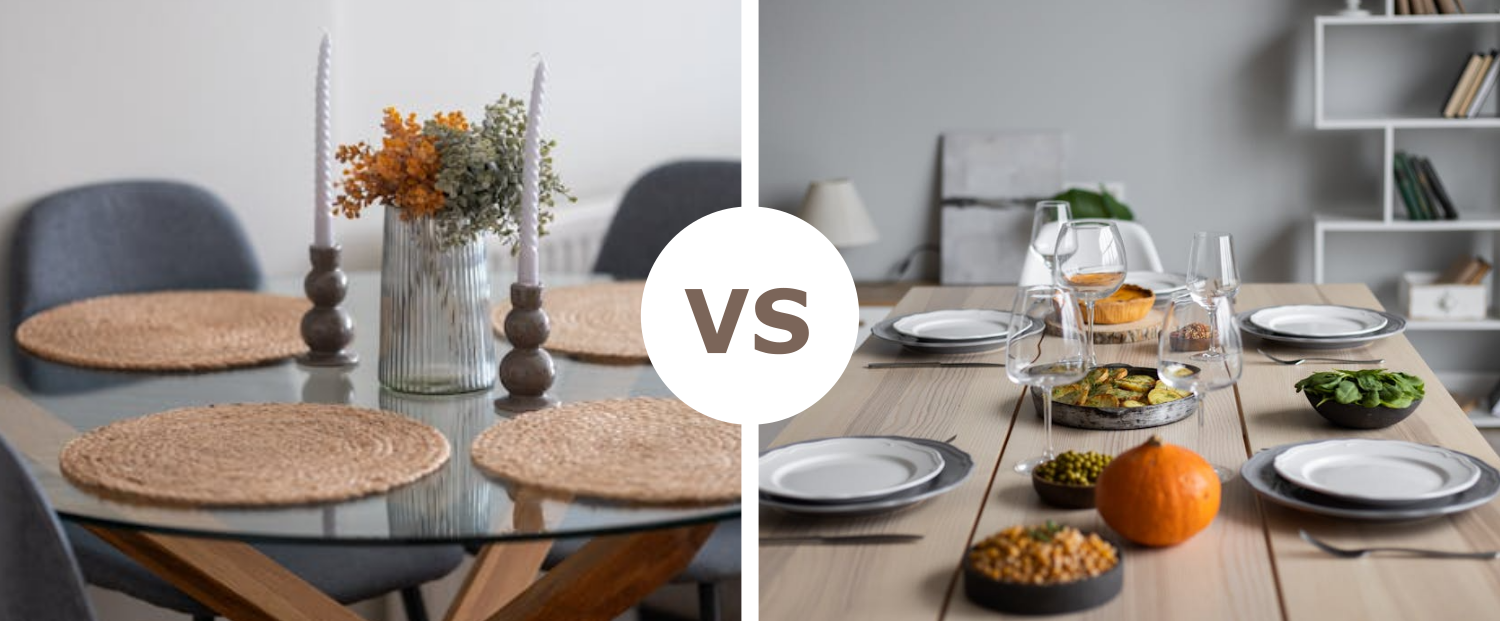

How To Choose The Right Dining Table Shape

Choosing a dining table sounds simple— until you’re standing in your space trying to picture how it will actually live in your home. Suddenly, table shape matters more than you expected.
Flow, seating, conversation, and even how your room feels all come into play. If you’ve been going back and forth between table shapes, you’re not alone. The round vs rectangular dining table debate is one of the most important design decisions you’ll need to make.
The truth is, there’s no one-size-fits-all answer. The right table shape depends on your layout, how you use your space, and the atmosphere you want to create. In this guide, I’ll walk you through exactly how to choose between a round vs rectangular dining table, with practical insights you can actually use.
Key Differences: Round vs Rectangular Table

At a glance, the round vs rectangular dining table decision comes down to shape— but in reality, it’s about how that shape influences your space.
1. Shape and Visual Impact
The shape of your dining table does more than fill space— it quietly defines how the room feels the moment you walk in. Before you even notice the materials or styling, your eye registers the silhouette. This is why table shape plays such a key role in setting the overall tone.
- Round tables feel softer and more relaxed. They naturally create a sense of intimacy and balance in a room.
- Rectangular tables feel structured and traditional. They anchor a space and tend to look more formal.
The difference is subtle, but it sets the tone immediately when you walk in the room.
2. Seating Dynamics
How people gather around your table matters just as much as how it looks. The shape directly influences interaction— who makes eye contact, how conversations flow, and whether the setting feels casual or more formal. If you regularly host or prioritize connection at the table, this is a detail worth paying attention to.
- Round tables encourage conversation since everyone faces each other and they’re equally spaced apart.
- Rectangular tables create head-of-table dynamics, which can feel more rigid, traditional or formal.
3. Space Efficiency
A dining table should fit your space in a way that feels effortless, not forced. The right table shape can improve movement, prevent crowding, and make the room feel more open. This is especially important in smaller homes or multi-use areas where every inch needs to work a little harder.
- Round tables work best in compact or square rooms.
- Rectangular tables maximize seating in long or narrow layouts.
4. Flexibility
Your dining table isn’t just for meals— it needs to adapt to everyday life. Whether you’re hosting guests, accommodating family, or adjusting to changing needs, flexibility becomes a deciding factor. Some table shapes naturally offer more versatility, which can make a noticeable difference over time.
- Rectangular tables are easier to expand with leaves.
- Round tables are more limited, though expandable versions do exist.
How Layout Impacts Your Dining Table Choice

Your room’s shape is one of the most important factors when deciding on a round vs rectangular dining table. A table that aligns with your layout will feel more natural and balanced, while the wrong shape can make even a well-decorated room feel awkward or cramped.
Best Layouts for Round Tables
- Square dining rooms
- Open-concept spaces
- Breakfast nooks
Round tables help soften boxy spaces and create a natural focal point.
Best Layouts for Rectangular Tables
- Long, narrow dining rooms
- Defined dining areas
- Open layouts where you want structure
Rectangular tables align with architectural lines, which makes the room feel intentional and grounded.
Maintain Visual Balance
Maintaining visual balance is key when choosing a dining table, since a mismatch between the table shape and the room’s layout can make the space feel off, even if everything else is well-designed.
For example, placing a rectangular table in a square room can feel overly rigid and boxy, while a round table in a narrow room may disrupt flow and feel cramped. Aligning the table shape with the proportions of the room helps create a more natural, cohesive look.
Entertaining: Round vs Rectangular Dining Table

If you host often— or have a growing family— seating capacity becomes a major factor in the round vs rectangular dining table decision. Here are two common dining situations and the best solutions:
Best for Conversation: Round Tables
If you’d like to create a space that feels warm, inviting, and easy for a small group of people to talk, consider a round table.
- Everyone is equally included
- No “bad seats”
- Ideal for smaller gatherings (4–6 people)
However, once you go beyond 6–8 people, round tables become less practical due to size and reach.
Best for Capacity: Rectangular Tables
If you have large gatherings and seating more people (comfortably) is the goal, consider a rectangular table.
- Seats more people comfortably
- Easier to scale for larger gatherings
- Works well for both casual and formal settings
Rectangular tables also allow for mixed seating (chairs + bench), which can maximize space.
Hosting Style Matters
Before choosing a dining table shape, think about how you actually use your space. Do you tend to host intimate dinners or larger gatherings? Do you prefer a more casual, relaxed setup or something that feels more formal? Your answers will guide your decision far more effectively than aesthetics alone.
Small Spaces: Round vs Rectangular Dining Table

If you’re working with limited square footage, this is where the round vs rectangular dining table decision becomes especially important.
Why Round Tables Work in Small Rooms
Round tables are often the better choice for tight spaces because:
- No sharp corners = easier movement
- Better flow = fewer visual interruptions
- Central placement = works well in square rooms
They also make a room feel less crowded, even if the table itself takes up a similar footprint.
When Rectangular Tables Still Make Sense
There are situations where a rectangular table works better in a small space:
- Narrow dining areas (like between a kitchen and living room)
- Wall-adjacent layouts
- Banquette seating setups
In these cases, a rectangular table aligns with the shape of the room, which actually improves functionality.
What About Round vs Square Dining Tables?
If you’ve ruled out larger rectangular options, the decision may now come down to round vs square dining table. Both are popular in smaller dining areas, but they behave very differently in a space.
When Square Tables Make Sense
- Small, square dining rooms
- Seating for 2–4 people
- Symmetrical layouts
Square tables are essentially a compact version of rectangular ones— but with less flexibility for larger groups. In most cases, if you’re debating round vs square dining table, the round option offers better flow and adaptability.
Final Thoughts: Round vs Rectangular Tables
Hopefully by now, the round vs rectangular dining table decision should feel a lot clearer— and more grounded in your actual space and lifestyle.
If you want something that feels relaxed, conversational, and flexible in smaller spaces, a round table is likely the better fit. If you need structure, seating capacity, and versatility for hosting, a rectangular table will serve you well.
The most important thing is alignment. Your table should match:
- Your room’s shape
- Your daily routines
- Your hosting style
- Your overall aesthetic
When those elements come together, the round vs rectangular dining table choice stops feeling overwhelming and starts feeling obvious.
Take a moment to visualize your space— not just how it looks, but how it functions. That’s where the right decision becomes clear.


