
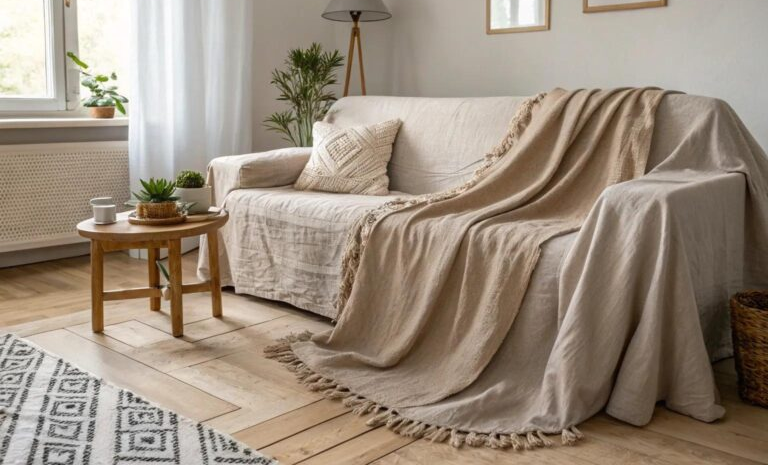

Choosing The Right Sofa or Couch Cover

A sofa is usually the most used piece of furniture in the house. It’s where you nap, host, spill coffee, and pile on with family at the end of the day. So when it starts looking worn — or simply outdated — it’s natural to consider a slipcover instead of replacing the entire piece.
Choosing a sofa cover can refresh a room and extend the life of your furniture. It can protect your investment, hide stains, and give tired furniture a second life. But not all covers are created equal — and not every couch is a good candidate.
If you’ve ever ordered one online only to wrestle with sagging fabric and awkward corners, you know what I mean.
This guide will walk you through exactly how to choose the best sofa cover for your space — from fit and fabric to style and structural reality — so your living room looks polished, not patched together.
What a Sofa Cover Can (and Can’t) Fix
Let’s start with something most sofa cover companies won’t say clearly: even the best sofa cover is cosmetic.
A slipcover can:
- Hide stains
- Protect against pets and spills
- Update color or pattern
- Make a dated sofa feel more current
But it cannot:
- Fix broken springs
- Repair sagging cushions
- Correct a warped frame
- Improve comfort
If your couch feels lumpy, squeaky, or structurally unstable, a cover won’t change that. It may look better for a while — but you’ll still feel the same issues underneath.
If the frame is damaged or the internal support is failing, you’re usually better off investing in reupholstery or a new sofa entirely.
A sofa cover works best on furniture that is still structurally sound but cosmetically tired.
Choose the Right Style of Sofa Cover
Slipcovers are visual first, functional second. So before diving into fabric types or stretch ratings, decide on the overall look and style you want.
Do you want:
- A relaxed, casual feel?
- A tailored, structured appearance?
- Something decorative and statement-making?
- A neutral, protective layer?
Loose vs. Fitted Cover

Loose-fitting couch covers:
- Feel casual and soft
- Work well in farmhouse or relaxed interiors
- May require occasional adjusting

Fitted (stretch) slipcovers:
- Follow the lines of your sofa
- Create a cleaner, more tailored look
- Feel more modern and polished
If your home leans transitional or contemporary, a fitted option usually looks more intentional.
If your space is layered and relaxed, a slightly looser drape can feel inviting.
When choosing the best sofa cover, the silhouette should support your living room’s overall design — not fight against it.
Fabric Matters More Than You Think
Fabric determines how your slipcover looks, feels, and performs over time.
And this is where many people make the wrong choice.
Avoid Overly Heavy Fabrics
Thick materials like chenille or velour can look beautiful in upholstery — but as slipcovers, they often:
- Don’t conform tightly
- Create bulk at the seams
- Feel heavy or stiff
Unless custom tailored (which is expensive), heavy fabrics rarely look polished in ready-made covers.
Look for Medium-Weight Stretch Blends
In most cases, the best sofa cover is made from:
- Polyester blends
- Spandex-infused fabric
- Stretch jacquard
- Durable knit blends
Why? They conform smoothly to your sofa’s shape, are easier to install, resist wrinkles, and are often stain-resistant — and many options are machine washable, which makes everyday maintenance far more manageable.
For homes with pets or kids, durability and washability matter more than texture trendiness.
Measure Carefully Before You Choose a Sofa Cover

* For references purposes only. Be sure to follow the measuring instructions provided with your sofa or couch cover.
“Universal fit” sounds reassuring. It isn’t. Even highly elastic couch covers struggle with certain shapes and it’s important to measure accurately.
Before ordering, measure:
- Sofa width (arm to arm)
- Seat depth
- Back height
- Cushion type (attached vs. loose)
Pay Attention to These Design Features
Slipcovers struggle with:
- Deeply curved backs
- Rolled or flared arms
- Exposed wood frames
- T-shaped cushions
- Oversized arms
If your sofa has a dramatic silhouette, expect minor air pockets or excess fabric.
A slipcover works best on:
- Straight arms
- Standard box cushions
- Clean-lined backs
If your couch has visible wooden arms or frame elements, a full cover may look awkward — and misleading to guests who expect softness.
The best sofa cover enhances your existing structure. It doesn’t disguise architectural features.
Color and Pattern: Protecting vs. Transforming
Color is where slipcovers can truly change a room. But choose carefully.
If You’re Covering Stains
- Go darker or patterned
- Avoid pale solids
- Consider textured weaves that disguise wear
If You’re Updating Style
- Choose a neutral that works long-term
- Avoid trendy prints you may tire of
- Consider subtle texture over bold pattern
Patterns like small-scale geometrics, soft florals, and subtle jacquard tend to feel more timeless than loud graphics.
If you’re trying to choose the best sofa cover, ask yourself:
Will I still like this in two years?
Slipcovers are affordable — but replacing them repeatedly adds up.
Think About Daily Use
Before clicking “add to cart,” think practically.
Do you:
- Have pets that shed?
- Eat on the couch regularly?
- Have young children?
- Frequently wash linens?
If yes, prioritize:
- Machine-washable fabric
- Wrinkle resistance
- Elastic bottom edges
- Non-slip backing
Some covers include foam anchors or anti-slip straps. These details matter more than decorative stitching.
The best sofa cover for a busy household isn’t necessarily the prettiest — it’s the one that stays put and cleans easily.
How to Make a Sofa Cover Look Custom (Not Temporary)

One concern many homeowners have is that slipcovers look cheap or obvious.
That usually happens because of poor installation.
Here’s how to elevate the look:
1. Tuck Strategically
Use foam rods or rolled fabric to push excess material deep into creases.
2. Steam It
Light steaming removes wrinkles and gives a tailored appearance.
3. Add Structure
Layer with structured throw pillows to sharpen the silhouette.
4. Ground It
Use a well-sized rug underneath to visually anchor the sofa.
Even the best sofa cover benefits from thoughtful styling.
When a Slipcover Isn’t the Right Choice
There are situations where a slipcover simply isn’t ideal.
Consider skipping one if:
- The frame is broken
- Cushions are severely sagging
- The sofa is extremely high-end upholstery
- The shape is highly ornate or antique
In those cases, reupholstery may preserve quality and increase longevity.
A slipcover is a smart solution — but not a universal fix.
Making Your Final Decision
Choosing the best sofa cover comes down to three questions:
- Is my sofa structurally sound?
- Does the shape work well with stretch fabric?
- Am I choosing a style that fits my home long term?
If the answer is yes to all three, a slipcover can be a cost-effective, practical refresh.
It allows you to:
- Experiment with color
- Protect against wear
- Extend the life of your furniture
- Update your space without a full redesign
When chosen thoughtfully, the best sofa cover doesn’t look like a shortcut — it looks intentional.
And that’s always the goal.


